Showing posts with label Tips. Show all posts

Thursday, April 30, 2009

Motorcycle Clutch Problems

motorcycle clutchBoth OEM and aftermarket motorcycle parts have their own sets of advantages and disadvantages. The former may be expensive compared to the latter however, buyers can be assured of its quality since they are equivalent to the parts that are already in the motorcycle when they are purchased. On the other hand, aftermarket motorcycle parts may be cheaper than the OEM parts. Moreover, they can be of equal or lesser quality than the latter.

Whatever motorcycle parts you choose, there is still that degree of caution and responsibility. Let us take motorcycle clutch as an example…

The usual problem with a motorcycle clutch is that it drags or slips. You may be driving confidently then suddenly surrounding circumstances tell your mind to hit the clutch but it won’t work because it slips? What do you think will result? This is pretty dangerous since it can spell a terrible crash, bump or worst loss of life.

motorcycle clutchTo preclude these things to happen, there are several things that we can do. First, you can drill holes in each friction plate. Might as well, clean and chamfer the holes and notches located at the edges of the steel plates. This way they will not slip without getting caught. Then, replace the rivets on inner clutch hub liner with nylatron. In order to do this, you have to remove the hub off the shaft and knock the rivets out. Clean up the surfaces. After cleaning, put the hub and basket on. Now you need not worry about your clutch because these things keep the clutch from dragging and slipping. It will allow its smooth and accurate release.

If you still have slip problems after assembly, before you crank the spring tension, you must take out the friction plates and examine whether there are shiny spots. Friction happens in these shiny spots. To eliminate them, use emery paper and sand off the spots then make the plate flat. When all plates are in good and uniform contact with each other you have a very good chance of running very light spring pressure without slip. Thus, it creates a nice easy shifting at your pleasure and safety!

Keep the clutch always in contact that fact alone can save your ride. Riding worry-free without any apprehensions makes your ride more exciting and fun!


Read more about “Motorcycle Clutch Problems”  »»

Friday, April 24, 2009

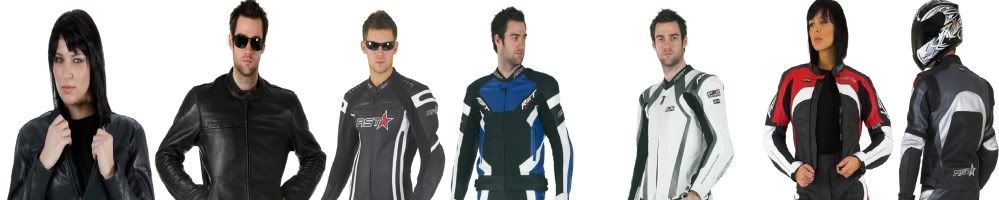
Buying Motorcycle Gear For Women

Motorcycle Gear for WomenAlthough you may not see many women riding motorcycles, they do and they want to look good while doing it. What are some tips that women riders should follow when they're looking for their motorcycle style? Remember, women in general do not try to look as rough and dirty as men, and they want to show off their body. At the same time, there are considerations of motorcycle safety as well.

Tip number one

Find a style that you like. When you first walk into a motorcycle gear shop, you may see many designs and different color. It may seem overwhelming but it's not as hard as you think. Usually a motorcycle gear shops are divided into the different categories of men and women. So all you have to do is find the women's section and look there. If you've never bought any motorcycle gear before, you probably don't have anything yet. This is a great starting point because you will be able to start from scratch and not have to worry about matching anything else you may own.

Tip number two

Keep with the motorcycle tradition. Motorcycle gear is typically made up of leather so you find that most of the gear is made of that. Other kinds of fabric are becoming popular with motorcycle gear shops as well. So you may have a wide range of products to choose from when you go to the motorcycle gear shop. Motorcycle tradition is all about the leather jacket, so when you find this all you have to do is match the rest of your outfit to your jacket.

Tip number three

Take your time. When you get to the motorcycle gear shop, you may be tempted to breeze through it as quickly as you can. This isn't what you should do because you want to take in all the different types of clothing that they have. So make sure that you have the time to really look at what they have and maybe even try on some pieces. That way you'll know that when you find a special piece it's perfect for you.

Women shouldn't be afraid to ride motorcycles and to find their motorcycle gear. It can be a fun experience as well as something that may define who you are as a person. You may not even realize it until you get on that motorcycle for the very first time. So make sure you have the right motorcycle gear to feel safe and comfortable on your first motorcycle ride.

Keywords: Motorcycle gear leathers, motorcycle gear, motorcycles
Abstract: Motorcycle leathers are an important part of a motorcycles gear collection. While you are shopping, it can be important to take several factors into consideration.

Motorcycle Gear Leathers And What You Need To Know

Motorcycle leathers are probably the most important part of your gear; they offer protection for your body as well as adding style to your motorcycle ride. The trick is finding the one that's right for you.

What kind of leathers are there

There are many kinds of leather items you can purchase; you just may not know what one you need. These products can be anything from leather gloves to leather pants and boots. If you had don't have any leather items already, you really do have a free range on what styles and products you can get. This is because you don't have to worry about what you already have, you can just get the ones that you like and match it up later.

Leather styles

There are many kinds of leather styles but you can pick from. These may be because of different colors or that differ ways that they look. Some may have designs carved into them; others may have patches attached or designs sewed into them. Depending on what leather item you're looking for, you may find many different designs that you'll have to pick from. Take some time and look in all the different designs that way you'll know when you found the perfect design for you.

Comfort

While leather is a great accessory for your motorcycle gear, you should also take into consideration your comfort. You don't want to be on the road and not feel comfortable on your motorcycle. So when you're in the motorcycle gear shop looking at leather, make sure you have the time to try it on. This way you'll know that it's still comfortable while looking good. If you don't have time to try it on you may be taking a chance that it doesn't fit right.

There are many things that you may want to consider when you're choosing your perfect leathers, but if you take the time and really look. You'll find great products in your motorcycle gear shop that fit your needs. You may even find gear that is close to your personality into personal style. You do want to make a statement when you're going down the road and your motorcycle gear leather is a perfect way to do that. Show what a waiting for, get down to that motorcycle gear shop and find some great leather.

Read more about “Buying Motorcycle Gear For Women”  »»

Wednesday, April 22, 2009

Lubricating Motorcycle Chains

Lubricating Motorcycle ChainsThe ideal chain is well-adjusted and lubricated. It must be free from dirt and there is an ample supply of oil or wax to lubricate it.

Most bikes are using O-ring chains. These chains come with links that have lubrication trapped inside the link at the back of O-rings. Lubricating the chains prolongs its life. Nonetheless, you need considerable amount of expert’s advice so as to perfect the art of lubricating. In this case, O-ring welcomes some external lube in order to cut down the friction on the sprocket. This way, the temperature is kept running down.

Nowadays, there is what we call spray lube. It is one of the most practical lube we have today. You need spray it to the chain while the latter is still warm, like for instance after a ride. Let the carrier liquids evaporate. This will take about ten minutes or so. Apply it to the inside of the chain. You can do this by spraying it on top of the lower run and forward of the rear sprocket.

Another alternative is the automatic oiling gizmo. So far, this is the best that I have ever tried. This is often used by bikes which have a drip feed to the chains. However, this is commonly used by those who have fully-enclosed chain systems. Motorcycle stores already have this product.

Whether you are using the old style or the modern alternatives made available by today’s technology, the thing is, we must adjust, clean and lubricate our bike’s chain regularly so as not to be bothered by future discrepancies that can lead to terrible accidents.

Cleaning Motorcycle ChainsCleaning the chain is not that difficult. You just have to soak rag in kerosene. Do not use petrol when you are using O-rings because this will damage the latter and dilute the lubricant. After soaking the rag, wipe it on the chain. So easy. Just don’t prop the bike on the center stand, start the engine, put it in gear and wipe the rag while it continue running, chances are your rag can be caught or worst it can toggle your hands at your detriment.

Now that we realize the significance of lube, the next query is - how often must it be done? The answer will depend on your riding activities. If your motorcycle is exposed to hard, rugged and dirty ride, might as well adjust, clean and lubricate your chain as often as you can because your ride punishes the motorcycle parts including the chain. On the other hand, a weekly check is good to those bikes which are not used in active and high-performance riding. Bear in mind, that a good chain and sprocket set should do 20,000 km and up.

Read more about “Lubricating Motorcycle Chains”  »»

Friday, April 10, 2009

Motorcycle Choose Options

motorcycle optionToday there are a variety of motorcycles available, something to pretty much any rider’s tastes. For those who prefer something more unusual, and have a higher budget, custom made motorcycles are always an exciting option. If you are looking into getting your first bike, you may well have looked online for reviews of different makes or models. This can be quite a daunting task. The moment you type a motorcycle related keyword into a search engine, you begin to sift through hundreds of advertisements and blogs that may seem of very little use. If you look hard enough, however, you can unearth a goldmine of information, from common faults with different makes and models, to general reviews and user opinions.

Magazines can also be a useful source of information, reviewing all sorts, from buyer’s guides to brakes for motorcycles. You may already have an idea of what your ideal bike will be like, but remember to consider all the practicalities such as your experience level and for what purpose the bike will be used. Like cars, motorcycles are changing and advancing rapidly, there are now electric bikes available, though they are unlikely to take the place of more traditional models any time soon!

Before choosing your first motorbike for definite, it is a good idea to spend quite some time getting acquainted with typical biking jargon and familiarising yourself with terminology. If learning to ride, you should choose a reputable instructor who will work at your pace and ensure you have a full understanding of how and why things are done in specific ways. An instructor should also be able to provide you with advice about selection of, maintenance of and parts such as brakes for motorcycles.

motorcycle optionsOnce you have purchased your own bike, get as familiar with it as possible. Find out how to use all equipment, and learn how to check levels such as oil. Get used to regularly inspecting brakes for motorcycles, suspension, tires and steering for any problems. Remember to store your vehicle safely, if it is to be kept outside, a waterproof cover should be able to prevent damage from rain and other moisture.

When you are proficient at bike care, maintenance, and have some experience at riding you may wish to upgrade to a newer or higher powered model. As when choosing any vehicle, look around to compare prices and specifications. If your find you want to upgrade anything, performance parts such as brakes for motorcycles are readily available. Try to choose a well known, good quality manufacturer, and get any parts fitted by a professional.

It is often not a good idea to start out on a motorcycle that is the make or model you have always dreamed of. Getting used to handling a bike and different situations that can arise on a low powered model is for the best. While you are honing your skills and learning to love life on the road, you can start to think about which bike is the one to make your dreams come true.

Read more about “Motorcycle Choose Options”  »»

Thursday, March 12, 2009

Biker Leather Jackets Care

A leather motorcycle jacket is the perfect choice for riding your motorcycle. It's also a long term investment so you should know about caring for your leather motorcycle jackets. Leather is durable and designed to last a long time with very little effort. Here are some tips to keep that jacket looking great.

How much actual care your jacket will need will depend on how much abuse your jacket takes. How much time it is in the hot sun or how much rain you expose it to will play a role in how much conditioning you'll need to give your leather.

If your leather starts to look and feel dry it's time to condition it. Rain is really hard on leather because it pulls the moisture out of the skin. It's actually a good idea to condition your jacket every time you wear it in the rain.

There are two schools of thought for conditioning your jacket. Many prefer mink oil is a good choice. It waterproofs it by clogging the pores similar to the way Vaseline would. Eventually it will dry out the leather and it may even leave a whitish haze when it solidifies in the colder weather. You can also use a Lexol type leather conditioner for your jacket.

If you don't treat your jacket and protect it from UV rays it will fade over time. Black leather is really susceptible to fading. Use a product like Aerospace Protectant to prevent fading. These products also condition the leather. It's rather like a sunscreen for your leather jacket.

To keep your leather dry use a spray water repellent which will protect you in mild to moderate rain falls. However don't expect it to save you in a major down pour which will soak through the leather. When spraying make sure to spray evenly and let it completely dry, otherwise you will get horrible lines in the leather.

Besides treating your leather jacket you should wipe it down with a damp cloth regularly. This will remove any surface dirt. When you are storing it you need to make sure that there is room all around it so it can breathe otherwise it may dry out.

Whenever you are using any of these cleaners or protectants you need to make sure the room is properly vented.

Never use hair gels or sprays or colognes or perfumes near your jacket. In fact avoid the use of any sprays near it.

If your coat gets wet while you are out then hang to dry where it can breathe but not directly near any heat. If your jacket develops a wrinkle just use a towel and your iron to remove it.

If you haven't yet purchased your jacket look for the best grade of leather you can afford. Always choose a full grain leather and settle for nothing less. It doesn't have to break the bank if you shop online.

Leather motorcycle jackets are as easy as any other leather product to care for and with a little TLC they'll last forever. What a great investment!

Read more about “Biker Leather Jackets Care”  »»

Wednesday, January 28, 2009

Motorcycles, Biker, and Alcohol

In the last twenty years, the legal system has created serious consequences for anyone driving under the influence of alcohol. However, the idea of driving a motorcycle under the influence is even more dangerous for a number of reasons.

First, it's more deadly. Riders do not have the advantage and security of a metal cage a vehicle offers in the event of a crash. In fact, the National Highway Traffic Safety Administration (2003), motorcyclists are about 26 times as likely to die in a traffic accident. It's clear why, it's the reason you love to ride, no restriction, open road. But it's also no air bags, no safety features, and open concrete with vehicles all around you.Second, motorcyclists were more likely to be intoxicated than any other driver, the highest of any type of vehicle. Motorcyclists had the highest rate of alcohol use among all vehicle types in crashes, motorcycles counting 37 percent, next to passenger cars at 27 percent, and sport utility vehicles at 27 percent.Lastly, operating a motorcycle requires much more coordination than driving a passenger vehicle. Your reflexes are slowed, your vision is impaired, and you are less coordinated.

For all of the efforts of law enforcement, the National Highway Traffic Safety Administration, and motorcycle groups themselves to lower the incidence of riding while under the influence, the amount of motorcyclist fatalities rose from 1998 to 2000, after it had been declining from 1993 to 1997.

Additional efforts are being made to reduce the number of accidents related to riding and alcohol use. This includes making people aware of the risks and having them take responsibility for themselves and others on the road.

Keep Wear The Gear and Safety Riding My Brother!!!

Read more about “Motorcycles, Biker, and Alcohol”  »»

Saturday, January 17, 2009

The Emergency Tips While Riding

For a hot biker, ride a motorcycle is fun. Of course, we want comfort. And that's supported by good condition motorcycle. Good condition without a motorcycle, riding will not be fun.

There are many factors it is not comfortable in the riding. One is the condition of the engine is not healthy. This is happening because the machine does not have maintenance. Maybe because we are too busy with our work, so they do not have time to care for a motorcycle.

Do you imagine, when you travel the distance, you have difficulties. You were trapped in the area of population that is still rare, because of your motorcycle engine suddenly died and can not be turned on again.

Many factors that cause the engine motorcycle you can not live anymore. Problems that we are here because the plug is not working anymore. We will discuss how to overcome it.

Because you are in a position far from the settlement, so that you can not ask the help of other people. Do not panic! There are ways that you can continue the journey so that you get to the city immediately following it and improve it.

First, we must freeze the machine, meaning it's time to open the plug from the cylinder head does not damage the plug thread. The next step, after the engine is completely cold, remove the plug from its place. Then a broken or destroyed by a white ceramic on the plug is. Then clean the surface of its gross with sandpaper. Once completed, post back to the original spark plugs. Turn on the machine, continue with the travel speed is low, because the plug is only temporary. Remember! Once you arrive in the city following his hope soon to replace the spark plugs.

Go Hot Biker.

Read more about “The Emergency Tips While Riding”  »»

Friday, January 2, 2009

Hot Riding Tips For Safety

One thing I hear from a lot of motorcyclists is that they have been riding for some many years and do not need to practice any riding skills. This is just an ignorant statement to make and often fueled by ego and pride. I have seen veteran riders of twenty years; do the stupidest things on a motorcycle. Sure they have been riding for twenty years, but have they truly ever learned to really ride correctly with skill and confidence. Sure some have the natural motor skills to perform well on a motorcycle but these refresher tips are there to make you more competent on your motorcycle while also boosting your ego since others will be impressed by your riding skills. Honest, you will be amazed how people notice a good competent rider.


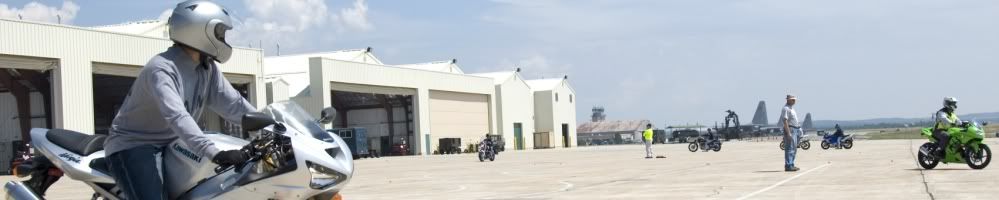
This lesson will discuss Limited-space maneuvers. Now you may think, what? If I am going slow in a parking lot or driveway, why do I need to practice these types of motorcycle riding maneuvers? While not as dangerous as intersections or other road hazards, limited-space maneuvers, like parking areas, can be quite a challenge. Practice turning at low speeds, and do not forget to use the counterweight technique to help balance your motorcycle at slow speeds. This means to put more pressure on the outmost footrest, leaning the upper body outward opposite the turn. You can also move off the center of the seat, opposite from the turn, to improve balance and turning capability.

The best-trained motorcyclists are Police Motormen. These motorcycle cops are trained to maneuver large police motorcycles at slow speeds in tight situations. Police Motormen practice doing U-turns within two marked parking spaces. Sounds easy right? Well it is not. Go out and try it one day. I guarantee it will take you 4 spaces or more to do a U-turn. Odds are some of you may even drop your bike. The trick is to use your clutch friction zone and rear brake to get the motorcycle to maneuver and handle at very slow speeds. By slow speeds I mean under 5MPH. Walking pace. Police need to do this all the time and they have the best riding techniques. The other key is to look where you want the motorcycle to go. If you look down while performing a tight figure eight or a U-turn, I guarantee you will go where you are looking – down.


I initially practiced these techniques and was amazed at how difficult it was to turn your motorcycle around by performing a U-turn while trying to keep the turn within two parking spaces. It took me several hours over a few days to get the hang of it. Next I added in figure eights and slow crawl riding as if I were in a parade. As my skill improved with this technique and my rear brake and clutch were showing signs of wear, I become very confident that I could handle my motorcycle in tight situations.

The benefits of practicing this riding technique are that you become more skilled with handling your motorcycle. If you find you are on a narrow country road, you will have the confidence to know that you can safely and skillfully perform a U-turn in the limited space provided. While attending motorcycle events where parking is at a premium, this slow speed practice will help you maneuver threw the crowded parking lot without smashing into and pedestrians or parked motorcycles. Again, I found myself using this skill set a lot. Other motorcyclists noticed my skill. They were amazed that I could maneuver a large Victory Kingpin in the limited spaces. Even when carrying a passenger. So dust off your motorcycle and dust of your stale riding techniques and hit the nearest vacant parking lot for some much needed practice.


Here are some tips for parking safely:


- If parking in a parallel parking space next to a curb, position the motorcycle at an angle with the rear wheel to the curb.


- If using the side stand, turn the handlebars to the left for added stability; lock the forks for security.

- The feet on sides and center stands can sink into soft surfaces causing the motorcycle to fall. To prevent this, carry a flattened aluminum can or similar rigid object to put under the stand.


- Park the motorcycle in first gear for extra stability, particularly if on an incline.

By: Beau Wiley
Beau Wiley is a contributing author to the Victory Custom shop -- Cycle Solutions http://www.CycleSolutions.net and the Victory Kingpin Cruiser Enthusiast site http://www.KingpinCruisers.net

Read more about “Hot Riding Tips For Safety”  »»

Friday, December 26, 2008

Hot Tips to Buying Safety Gear

This is some things you should know before you make your purchase, because that will save your wallet, your skin and your life!:

1. Your motorcycle shop should be your first place to start your shopping, If you're buying a motorcycle, see if can get the clothing into the financing deal. This way, you can negotiate a better deal and do not have to pay up front for the gears.

2. Get a full set of motorcycle clothing which includes helmet, jacket, boots, pants, gloves and glasses. Why would you want to risk any parts of your body with injuries? Each piece of the clothing plays an important role in protecting a specific part of the body.

3. Aesthetics should always be secondary to protective quality. If you have to choose between looking good and having your fingers or toes intact after a ride, what would it be? The answer is obvious, but try to go for bright colored clothing as it is shown in a study that wearing eye catching gear reduces the risk of having an accident significantly (up to 37%!). However, finding motorcycle clothing which also looks good is very much a possibility with the amount of gear out there from so many manufacturers.

4. Buy clothing that offers superior protection to areas of the body where the bone is just below the surface of the skin e.g. knuckles shoulders, hips, knees and ankles. Try to look for clothing that has added thick body armor stitched on these areas.


5. Explore other options besides leather. Leather has over the years been proven to be the best material for motorcycle protective clothing, due to its resistance to tear, its natural warmth, and its acting as a first layer of defense, coming between the biker and the rough asphalt road. However, protective clothing from man-made textile is becoming popular and may be more suited for certain weather and conditions (e.g. Cordura, Kevlar).

6. Consider adding other impact protection gear: Extra impact protection can be bought separately like back protectors. For an important area like your back, it might just save your life! If you worry that you may forget to put the extra gear on, buy clothing that already has a degree of impact protection included.

7. Be sure to check out the internet to look for great deals. It's a vast marketplace to shop for motorcycle protective clothing. You can compare prices and qualities from different brands and manufacturers, as well as read reviews from other buyers.


Motorcycle clothing explained

Of course you can wear anything you want when riding your bike, but a smart motorcyclist knows appropriate clothing not only make you look cool but also protect you from injuries in the event that you crash.

No matter if you're into Harleys, custom choppers, superbikes,or even dirtbikes, you're gonna need a set of clothing to match your mean machine.This normally includes:

1. Motorcycle Helmet

2. Motorcycle Jacket

3. Motorcycle Pants

4. Motorcycle Boots

5. Motorcycle Gloves

Read more about “Hot Tips to Buying Safety Gear”  »»

Hot Tips to Buying Big Bike

Big Bike buy may be your dream since we are still children. Do not be ashamed, Big Bike is worth a dream. Big Things We Love!


1. Be patient if you want to buy big new bike, including the CBU. CBU dealer will usually order a motorcycle when there is ensure that you want to buy. Most likely they do not keep stock of the many motorcycles. Different if you want to buy a motorcycle that has been available in the dealer.

2. When you decide you want to buy a motorcycle second, does not necessarily have a problem. But you should get an invoice of purchase. Check the documents thoroughly. It is recommended to check directly to the authorities. Not a secret anymore that there is also a motorcycle which is the stuff that falsified.

3. Stay important document Motorcycles and Driving License. Letters Club Motorcycles, Mail Road, and other documents it is not important documents essential for the motorcycle.

4. Surveys condition motorcycle who want to buy, with the community. Surely they will be happy to tell you about the history or the specification of the motorcycle. You can ask for opinions on whether a motorcycle accident is never visible, or what the benefits and shortfalls. As we discuss the motorcycle, and so before the adoption of a motorcycle, you already have enough information.

Hopefully with the purchase Big bike can add your driving experience. And you will be the Hot Biker with Hot Bike ride. Just Remember to Safety Riding!

Read more about “Hot Tips to Buying Big Bike”  »»

Tuesday, December 23, 2008

Motorcycle Safety Riding


On the highway, motorcycles are “small fry”. They’re easy for autos and trucks to miss or disregard. Over the last decade, there has been an increase in serious and sometimes fatal accidental injuries to motorcyclists. Consequently, responsible motorcyclists always stay alert to nearby vehicles and their surroundings. But that’s not enough if you want to take a safe ride.

In many important ways, operating a motorcycle is not like driving an automobile. So you have to change your way of thinking and your way of driving when you ride your motorcycle. For example, to turn a motorcycle left or right, it’s not just a matter of turning a steering wheel. You must lean left or right depending on which way you want to go. Your motorcycle has two brakes, and you must learn to use them both and in coordination with each other. Unlike most automobiles which are equipped with automatic transmission, you will need to shift gears on a motorcycle. For this reason, going up or downhill can be particularly tricky. And these are just a few of the differences you need to learn.

What are some of the basics in motorcycle safety?

• Make it easy for automobile and truck drivers to see you.

Wear bright colored clothing. Fluorescent, orange and/or yellow shirts, vests, jackets, and helmets enhance visibility during the day. At night, wear reflective material on helmets, vests/jackets, and even shoes. Remember, you must be seen from the side, not just the back and front. Put reflective material on the sides of your helmet, clothing and shoes, not just on the front and back. If a motorist can’t see you or your bike, he won’t take action to avoid you.

Make it a habit to use your turn signals – always. Turn signals tell other drivers what you plan to do. They make your bike easier to see on the road. Nearby motor vehicle operators are more likely to notice your bike’s flashing turn signal than its activated taillight. Equally important, however, is the need to deactivate your turn signal as soon as you complete your turn or as soon as you decide not to turn after all. If your turn signal remains activated after you have made a turn, the driver behind you may assume you will turn again, and he may pull directly into your path.

Enhance your visibility by tapping your foot brake lightly before you slow down, especially when you anticipate a quick stop. The flashing brake light will alert the driver behind you to your sudden change in speed.

Stay out of blind spots. Motorcyclists are more at risk in a blind spot than other motorists because their cycles are relatively small compared to trucks and automobiles. Whenever you approach a vehicle you may want to pass, you must make a choice, and quickly too. Do you really want to pass? If so, pass as fast as you reasonably can. If not, drop back, well out of the blind spot. The less time you spend in another driver’s blind spot, the safer you will be.

As you travel along the roads and highways behind another vehicle, take care to position your bike where the other driver will be able to see you in his rear view mirror. Keep in mind that intersections are always dangerous. It’s where most motorcycle crashes happen because auto or truck drivers who approach an intersection sometimes fail to see the motorcyclist who has the right of way as he travels down the main thoroughfare.

• Keep your headlights on night and day.

Sound strange? Yes, but studies show that keeping your headlights on high beam during daylight hours increases your visibility to oncoming traffic and prevents accidents.


• Wear a Federal Motor Vehicle Safety Standard (FMVSS) No. 218- compliant helmet every time you ride your bike.


It’s the law in many states so you may have no choice in the matter. Regardless, it is always safer to ride wearing a helmet that meets recognized Snell, ANSI, and/or Federal DOT standards. Statistics show helmets are 37% effective in preventing fatal injuries. What does this mean? For every 100 motorcyclists who die in motorcycle crashes, 37 of them would have been saved had they been wearing a helmet when the accident happened. And make certain your helmet is, in fact, a certified/compliant helmet. Watch out for helmets with false certifications or counterfeit stickers imprinted with a DOT symbol.

Accidents happen close to home, not just far away. Never say to yourself, “Well, I’m just going a mile or two to the store or to a friend’s house, why should I bother with a helmet?” Helmets save lives. They give you some measure of protection against serious brain injuries in the event of an accident.

In addition to helmet laws, there may be requirements in your state regarding face shields and safety glasses or goggles. Face shields protect your face from rain, dust, insects and flying debris. Goggles protect your eyes. Special regulations may control whether or not a motorcycle may carry a second passenger. This usually depends on whether your motorcycle is equipped with a permanent seat specially designed to carry a second person. A passenger who is not properly seated on a motorcycle is at increased risk of falling off a bike and accidental injury.

• Follow state and local traffic laws.

Motorcyclists must follow the same “rules of the road” and traffic regulations as automobiles and trucks. These laws may be even more important to the safety of the motorcycle operator than to drivers of other motor vehicles. After all, motorcycles are not equipped with the same physical protections and restraints found in autos and trucks. Familiarize yourself with the general motor vehicle laws of your state. Just as important, study carefully the statutes directed specifically at the operation of motorcycles. They were enacted to help ensure your safety.


• Take a motorcycle rider skills training course.


You can pay with your life if you don’t learn the essential skills necessary to operate a motorcycle properly and safely. Most everyone takes a driver training course to obtain an automobile driver’s license when they are teenagers. In fact, many states mandate such instruction because well trained automobile operators make for safer roads and highways. It makes just as much sense for motorcycle operators to take a skills training course given by a professional instructor and designed specifically for motorcycle operation.

There are motorcycle rider skills training courses in most states. Your state department of motor vehicles, for one, should have information on such programs. And remember, there are skills training courses not just for the novice but for the more experienced rider as well. Take the time to refresh and refine your rider techniques by taking an advanced skills course every few years.

• Obtain the driver’s license endorsement you need to legally operate a motorcycle in your state.

Statistics kept by The National Highway Traffic Safety Administration (NHTSA) tell us that 25% of the motorcyclists who died as a result of traffic accidents in 2004 were either not licensed at all or were not properly licensed to operate a motorcycle.

• Don’t speed.

In 2004, 36% of all fatal motorcycle accidents were the result of speeding at the time of the accident. It’s simple. Speed kills.

• Keep a safe distance behind other vehicles.

Think you don’t have to maintain the same distance behind an auto or truck that an auto or truck must keep as it travels behind other vehicles? Wrong! A motorcycle ordinarily requires as much stopping distance as an automobile. Studies have shown that following too closely is a major cause of accidents on the part of the motorcyclist.


• Don’t ride in an impaired condition.

It is no surprise that alcohol and other drugs play a substantial role in too many motorcycle accidents. In 2004, for example, alcohol was involved in a much higher percentage of motorcycle accidents (31% higher) than auto accidents. And worse, according to NHSTA, 41 percent of the 1672 motorcyclists who died in single vehicle crashes in 2004 had blood alcohol levels above the legal minimum of .08 g/dL. Never ride while intoxicated.

• Give your bike a “pre-trip” inspection.

Long distance truckers give their tractor trailers daily pre-trip inspections and so should motorcycle operators. Check tire air pressure and the hydraulic fluid level. Look for signs of an oil or gas leak. Do headlights and taillights work in both high and low beam? Are your brake lights and turn signals operational? Do you need to refill your coolant reservoir?

Clutch and throttle should work smoothly. Clean your mirrors and adjust them when needed. Engage your front and rear brake levers, one brake at a time, to ensure they are in working order.

• Never ride someone else’s bike without first familiarizing yourself with its particular features and/or without giving it a pre-trip inspection.

Don’t assume that someone else’s bike is just like yours. Make sure you know the location of the turn signals, the horn, the headlight switch, and the engine cut-off switch. Familiarize yourself with the controls and the bike’s gear pattern. Practice working the throttle, clutch and brakes a few times before you take a borrowed bike for a spin.

• Beware of road surface and other hazards.

Road surfaces that may not be so dangerous for auto and truck drivers may be very dangerous for the motorcyclist. Gravel roads, wet pavement, wet pavement with oil slicks, and paved roads with loose sand and gravel are especially treacherous. These surfaces provide poor traction for motorcycles traveling along them. Motorcyclists should think twice about taking their bikes out at all in mud, snow, or icy conditions. During Autumn, wet leaves can cause problematic conditions as well.

Uneven surfaces can be dangerous. The motorcyclist should drive especially carefully when passing over bumps, broken pavement, potholes, railroad tracks, steel plates, grates, manhole covers or raised lane and highway marker to name just a few.


• Remember that darkness reduces visibility on the road.

If a motorcycle can sometimes travel unnoticed by traffic nearby in broad daylight, the situation at night is even more hazardous. Darkness reduces visibility. At night, it is more difficult for other drivers to see your relatively small motorcycle or to pick up its headlights and taillights from among the myriad of other vehicle lights surrounding you.

It’s up to you to keep the odds on your side. Drive slower at night. Keep a greater distance between you and the vehicle directly ahead of you. Unless you are following immediately behind another vehicle or another vehicle is approaching you from the opposite direction, use your high beams. They will help you see unexpected obstacles or animals in the road in front of you.

• Always remain alert to your surroundings and nearby vehicles.

You can’t take action to avoid a potential accident if you are not aware of the danger. There are negligent motorists on the roads. They may drive recklessly so defensive driving is essential. What is one of the most deadly maneuvers a motorcyclist is likely to confront everyday on the road? It is the other driver who turns left in front of him while the cyclist is doing one of three things: (1) traveling straight, (2) passing the other vehicle, or (3) overtaking the other vehicle. In 2004, 39% of fatal motorcycle accidents occurred under one of the foregoing fact patterns. Do what it takes to ensure the other driver knows you are in his path if he decides to turn left in front of you.

Following the suggestions outlined above will make for safer motorcycle operation. The stakes are high. And who has a greater interest in motorcycle safety than the motorcyclist himself? The cyclist who takes responsibility for ensuring he has taken every precaution to make his ride a safe one is less likely to find himself injured in a serious accident.

Finally just remember, when you riding, wear the stuff, and ride with care. Be Hot Biker.


Read more about “Motorcycle Safety Riding”  »»

Thursday, December 18, 2008

Helmet is Very Important for Your Safety

Hot Biker Wear
Safety Motorcycle Helmets

Motorcycle helmet is used as a protective gear for the head to avoid severe injuries brought about by accidents. In some countries, wearing helmet is comparable to wearing seatbelts, regulated as part of the street ordinances as general safety measure. But of course, any promulgation imposed is debatable and others would drop the matter in every philosophical manner they can give reason against its use.

Looking at the physical make-up of motorcycles will not guarantee pure salvation in every imaginable trauma. When used, it can only lessen the severity. To have an understanding on its function it is important to know how fatal head injuries can disable a person in one incident. When it comes to serious matters like heavy impact, a helmet is nothing. The most important thing about skull fractures is to avoid the fragments from embedding the sensitive tissues of the brain, until then, most head injuries are not as fatal as expected. Basically, a full-blown impact on head can lead to permanent malfunctioning of the body system.


Another kind of fatal head injury caused by motorcycle accident is when the brain is stirred while there is no open wound in the head. In this case the brain bumps the side of the skull leading to small yet deadly movements and rotation enough to cause internal bleeding inside. The use of properly designed motorcycle helmet can help absorb the shock in the head after it sinks to its protective cushions. It must not be too soft to let the head crush through its hard interior walls at once. After that, the hard plastic will yield without control. Helmet design considerations are all about the tolerable impact the head can handle, which the soft linings provide as protection, and the exterior protection from punctures.


Types of motorcycle helmets for effective use come in different appearance:

FULL FACE - Covers the full area of the back of the head, chin but has a shield made of plastic in the eye area for visibility. It is usually ventilated though some still consider it warmer and lacking flow of air inside. It tends to isolate a rider and restrain hearing because of full head coverage.

OPEN FACE - Almost the same as the full face design except it has no chin cover, which means it has low protection for the face. It has a plastic shield open to particles during a ride. It can cause injuries out of trapped small debris caught on speed. Thus, it is advisable to wear riding goggles as additional protection for the eyes.

Motorcycle helmet may not give ultimate protection but it saved a lot of lives during minor injuries.


Tips In Buying The Right Motorcycle Helmet

Although most people do not actually consider them as essentials and will in fact buy them last, motorcycle helmets are one of the most important accessories when you have a motorcycle. In fact, state laws have included the wearing of motorcycle helmets. This, lawmakers say, will be able to prevent major injuries should accidents happen. Helmets protect the person from suffering from head injuries that are potentially dangerous and even fatal. Passengers are even asked to wear helmets especially when cruising at high speeds.

Below are some tips that will help you buy the right motorcycle helmet.

1. Does it meet the DOT standard?

Before buying a helmet, make sure that what you have chosen meets with the criteria set by the Department of Transportation’s Federal Motor Vehicle Safety Standard 218. You can determine this by looking for the symbol of the DOT on the helmet.


You will also find a label inside the helmet that provides you with essential information about the helmet such as the manufacturer’s name, the year and the month the helmet was manufactured, the model number, the size of the helmet, the materials used for its construction and of course some information about the company. Make sure that both the logo and the label is present.

2. Is it quality-made?

Helmets should be made from a firm polystyrene layer or Styrofoam layer that will help protect your head from injury. The layer should be an inch thick and should weigh about three pounds. It should be simple constructed with none of the embellishments that will only cause injury in your head such as spikes or other protruding decorations. Chin straps with sturdy rivets should be also be present as this will help keep the helmet in place.


3. Does it fit your style?

A helmet need not be out of style just because it is considered as a safety gear. It can also be an avenue where one can make a fashion statement. Try looking for great illustrations on the outer shell of the helmet. Some people even have the illustrations custom-made.

4. Does it offer full protection?

Helmets that protect the whole face will of course serve you in good stead during collision. The plastic face shields will also protect you from the wind, the dust, rain, insects and road debris that are thrown up by passing vehicles. If you do not want helmets with the shield on them, buy a separate goggles that will help protect your eyes. One thing that you should know is that windshields are not enough to protect you.

Read more about “Helmet is Very Important for Your Safety”  »»

Old Home

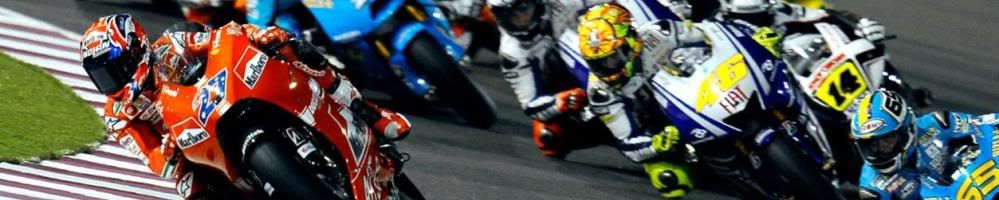
MotoGP World Championship Results

MotoGP Results
Pos. Rider Nation Team Points
1. Casey STONER........................ AUS................. Ducati Marlboro Team.......................... 90
2. Jorge LORENZO....................... SPA................. Fiat Yamaha Team............................... 86
3. Valentino ROSSI...................... ITA.................. Fiat Yamaha Team............................... 81
4. Dani PEDROSA...................... SPA................. Repsol Honda Team............................... 57
5. Andrea DOVIZIOSO................ ITA.................. Repsol Honda Team............................... 56
6. Marco MELANDRI................... ITA.................. Hayate Racing Team............................ 48
7. Colin EDWARDS..................... USA................. Monster Yamaha Tech 3....................... 45
8. Loris CAPIROSSI...................... ITA................. Rizla Suzuki MotoGP............................. 38
9. Chris VERMEULEN................. AUS................. Rizla Suzuki MotoGP............................. 37
10. Randy DE PUNIET.................. FRA................. LCR Honda MotoGP............................... 34
11. JAMES TOSELAND................. GBR................. Monster Yamaha Tech 3....................... 26
12. Toni ELIAS............................. SPA................. San Carlo Honda Gresini....................... 23
13. Alex DE ANGELIS................... RSM................. San Carlo Honda Gresini....................... 21
14. Mika KALLIO.......................... FIN.................. Pramac Racing.................................... 19
15. Nicky HAYDEN...................... USA................. Ducati Marlboro Team.......................... 13
16. Niccolo CANEPA..................... ITA.................. Pramac Racing.................................... 10
17. Sete GIBERNAU...................... SPA................. Grupo Francisco Hernando.................... 8
18. Yuki TAKAHASHI.................... JPN................. Scot Racing Team MotoGP.................... 8